


The Craftsman
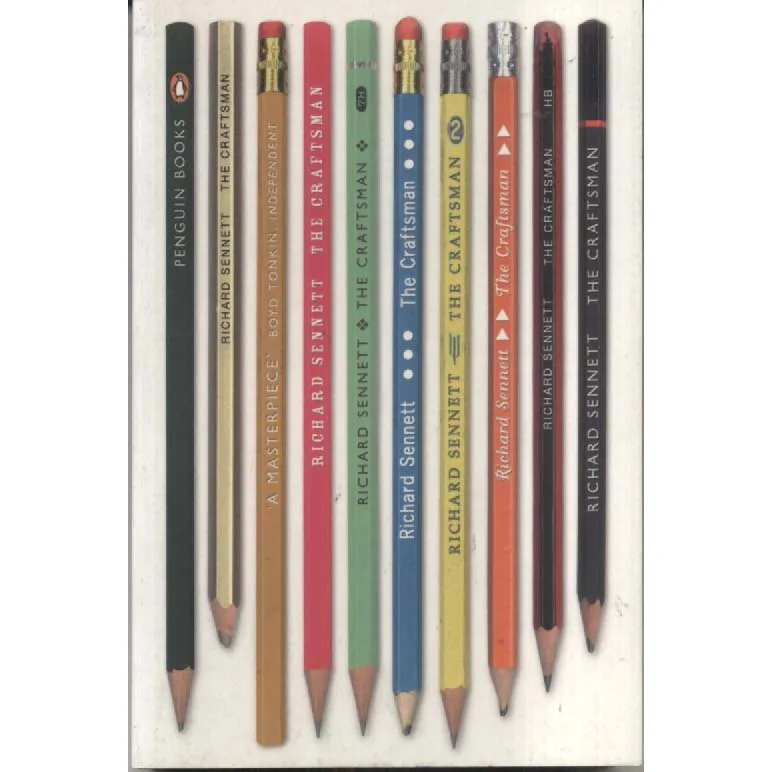
Publisher: Penguin Books
Format: Paperback
ISBN: 9780141022093
Once upon a time, "craftsmanship" meant someone quietly making something beautiful with skilled hands. Nowadays it can also describe writing elegant computer code, restoring a vintage motorcycle, baking the perfect loaf, or spending three hours adjusting a spreadsheet until the columns line up with almost supernatural precision. Richard Sennett’s The Craftsman takes this deceptively simple idea and reveals it to be one of the great organising principles of human civilisation. It turns out that doing a job well, simply for the satisfaction of doing it well, is a rather revolutionary concept.
Sennett argues that craftsmanship is not reserved for cabinetmakers, potters or violin builders. It is a deeply human impulse that crosses every profession and every age. Whether the task involves shaping wood, designing buildings, performing surgery, writing software or conducting scientific research, the same habits emerge: patience, curiosity, repetition, problem-solving, and the quiet refusal to settle for "that’ll do." In an era increasingly obsessed with speed, efficiency and quarterly targets, this comes as a pleasantly unfashionable manifesto for slowing down and getting things right.
The book roams effortlessly across history, philosophy, architecture, music, engineering and sociology, introducing medieval guilds, Enlightenment thinkers, modern workshops and contemporary workplaces as though they were all attending the same unusually civilised dinner party. Sennett has the enviable ability to make subjects you never expected to care about suddenly become fascinating. One moment you’re reading about Renaissance workshops, the next you’re wondering whether your own approach to everyday tasks could do with a little less haste and a little more care.
What makes The Craftsman especially rewarding is that it refuses to romanticise labour while still celebrating it. Mistakes, failures and endless practice are not unfortunate detours but essential parts of learning. The master craftsperson isn’t someone blessed with magical talent; they’re simply the individual who kept turning up long after everyone else decided the job was difficult enough already. It is a comforting thought, unless you were hoping there might be an easier route.
As sold by Crappy Old Books, this 2009 Penguin Books edition is in As New condition, making it an ideal copy for anyone interested in philosophy, design, psychology, history, engineering or simply the enduring pleasure of competence. Sennett writes with clarity and warmth, balancing scholarly depth with an engaging style that never feels like an academic lecture in disguise.
Perhaps the greatest irony of The Craftsman is that it quietly dismantles one of the modern world’s favourite myths: that faster is always better. Instead, Sennett makes an eloquent case that the finest work—whether it’s a hand-built chair, a beautifully written sentence or a perfectly engineered machine—is rarely hurried. In a culture increasingly devoted to instant results and disposable everything, this book is itself a carefully crafted object: thoughtful, enduring and assembled with the sort of attention to detail that it so passionately celebrates. It’s the literary equivalent of a hand-made workbench in a world determined to sell you a flat-pack alternative.7.30
Keep browsing: See more Non-Fiction books Other books by Richard Sennett
